A neutral look at the evidence on meal timing, protein distribution, and what actually drives sustainable weight loss.
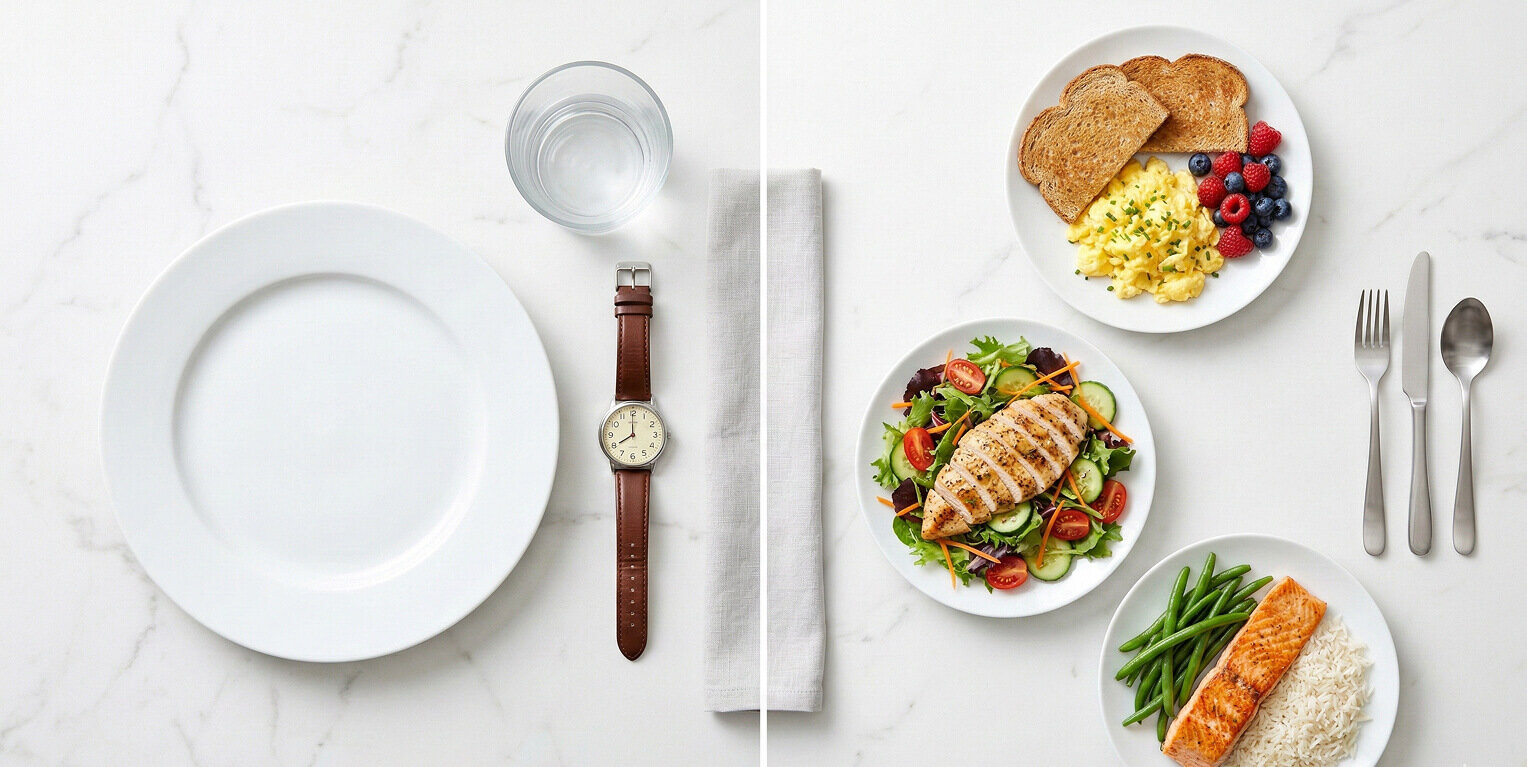
Skip meals or build better ones? The answer depends on protein, satiety, and sustainability.
How Intermittent Fasting Works
Intermittent fasting (IF) restricts when you eat rather than what you eat. The most common approach is 16:8 — fasting for 16 hours and eating within an 8-hour window, typically skipping breakfast and eating from around noon to 8pm.
The mechanism behind weight loss with IF is straightforward: by eliminating one eating occasion, most people naturally consume fewer total calories. There is no strong evidence that IF produces metabolic benefits beyond what calorie restriction alone achieves. The weight loss is driven by eating less, not by when the eating happens.
For some people — particularly those who are not hungry in the morning and prefer larger meals — this approach can feel natural and effective.
For many others, it creates problems that undermine consistency and results.
Three Problems with Intermittent Fasting for Weight Loss
1. It makes hitting protein and fiber targets significantly harder
Adequate protein is essential for satiety and muscle preservation during weight loss. A typical target might be 140–160 grams of protein per day. Spread across three meals, that is roughly 45–55 grams per meal — achievable with a well-built plate.
With intermittent fasting, that same protein must be consumed in two meals. That means 70–80 grams of protein per sitting. For most people, this is very difficult to do consistently. The result is that protein intake drops, hunger increases, and the body loses more lean muscle relative to fat during weight loss.
The same challenge applies to fiber. Eliminating a meal removes one opportunity to include fiber-rich foods — vegetables, beans, berries, whole grains — that contribute to fullness and digestive health.
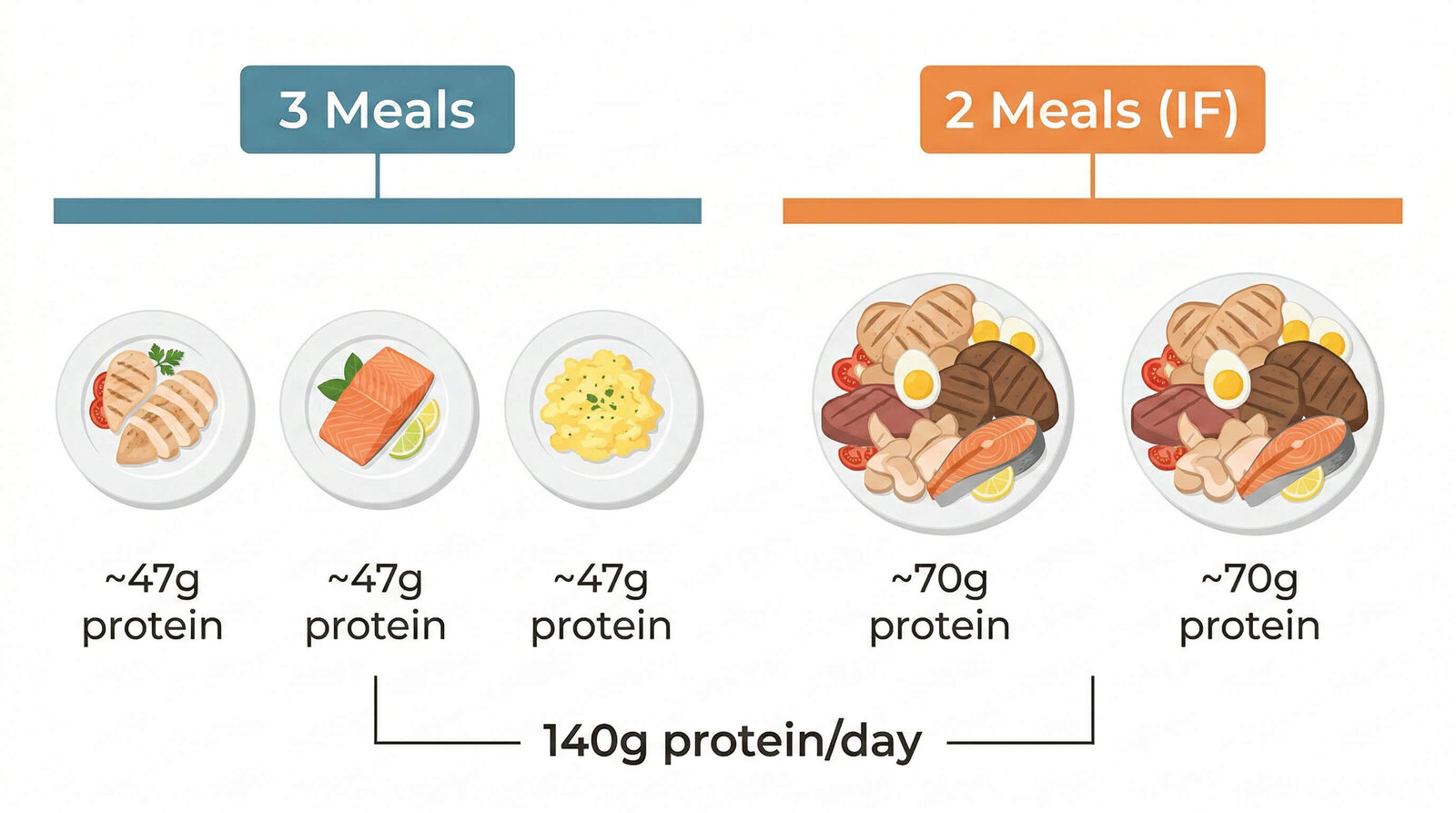
The same 140g protein target is much easier to hit across three meals (~47g each) than two (~70g each).
2. It can increase cravings and rebound eating
When you fast for an extended period, you often arrive at your first meal ravenous. In that state, food choices tend to shift toward calorie-dense, immediately satisfying options rather than high-protein, high-fiber meals that support satiety.
Many people report that the restriction in the first half of the day triggers stronger hunger and cravings in the second half — sometimes more than they would experience eating three meals throughout the day. The body’s stress response to prolonged fasting can amplify this effect, making the overall calorie balance harder to manage, not easier.
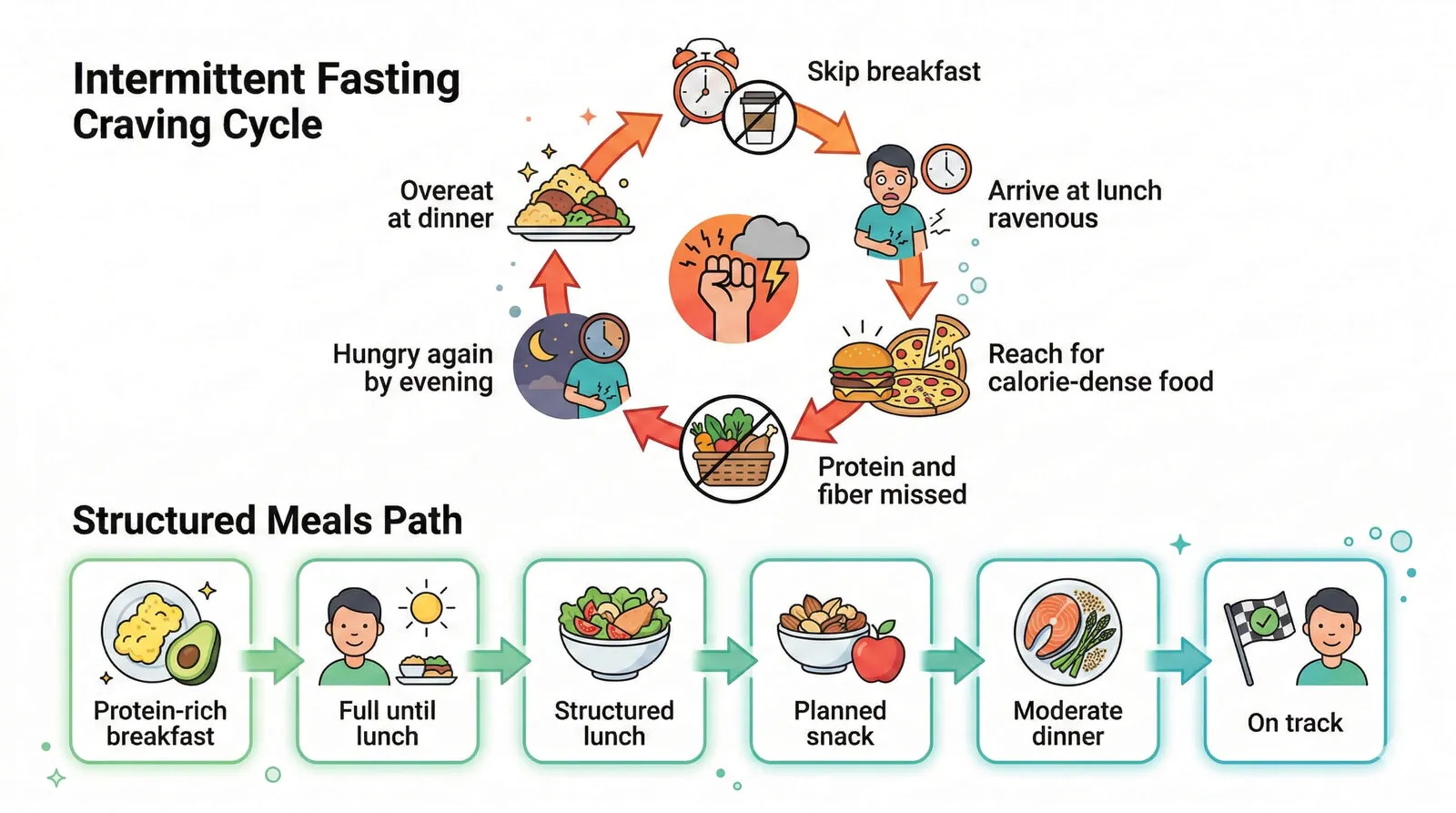
The fasting craving cycle vs. the structured meals positive flow.
3. It is not necessary
This is the most important point. Intermittent fasting is a strategy for reducing calorie intake. But it is not the only strategy, and for many people it is not the best one.
Three structured meals within a calorie target achieves the same goal — eating fewer calories than you burn — without requiring extended fasting. The difference is that you consciously invest calories in breakfast to stay full until lunch, then have a slightly smaller lunch and dinner than you would with IF. The total calories for the day are the same. But the hunger, the cravings, and the protein shortfall are avoided.
If you can achieve a calorie deficit while staying full and hitting your protein target, there is no additional benefit to restricting your eating window.
When Intermittent Fasting Does Work
IF is not inherently bad. It can work well for people who:
- Genuinely do not feel hungry in the morning
- Prefer fewer, larger meals
- Can consistently hit their protein targets in two meals
- Do not experience rebound cravings from the fasting period
If someone is losing weight, maintaining muscle, and feeling good with IF, there is no reason to stop. The question is not whether IF can work, but whether it is the most sustainable and effective approach for a given individual.
For most people trying to lose weight — especially those who struggle with hunger, cravings, or inconsistent eating patterns — structured meals are more practical and more sustainable.
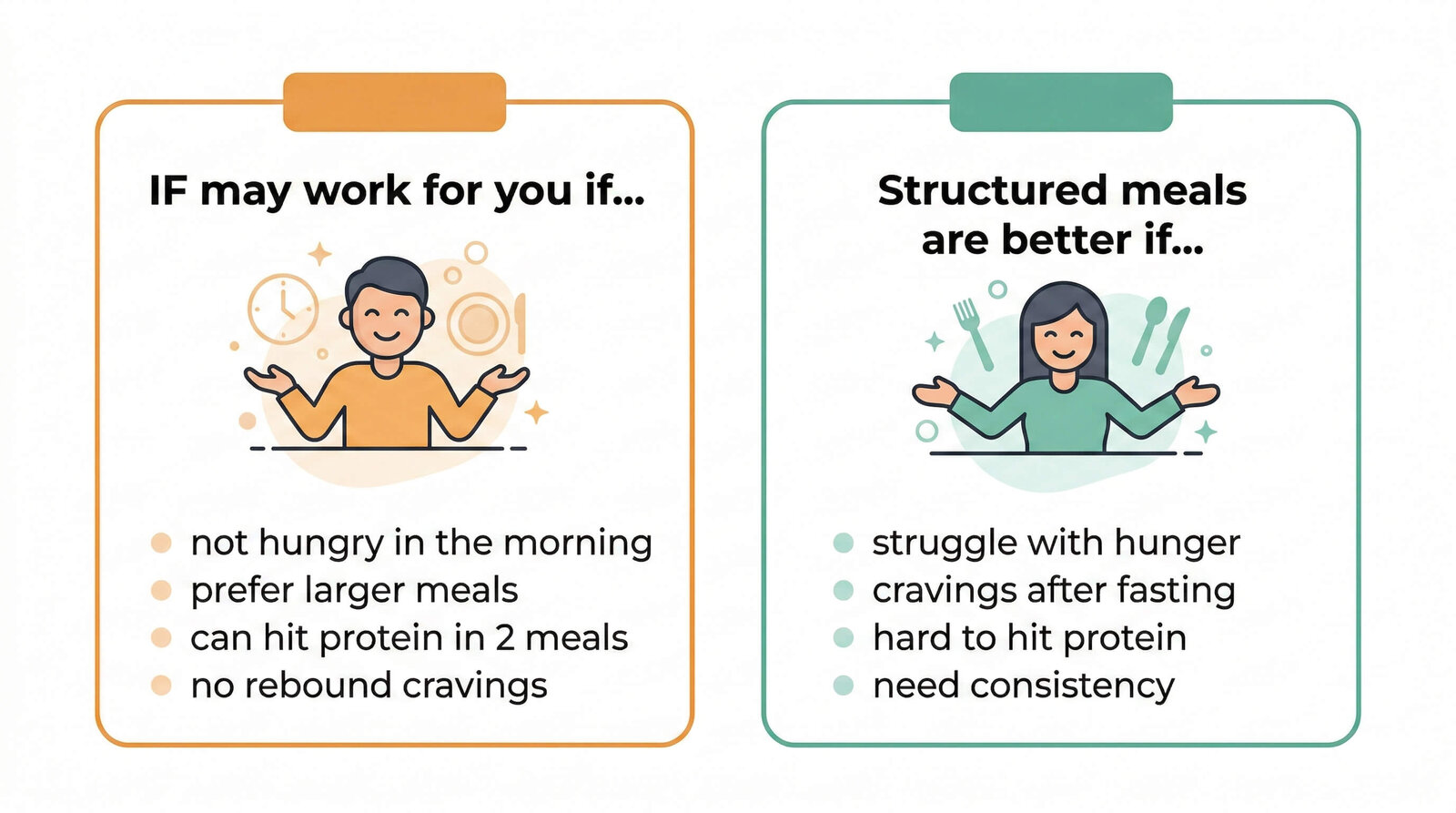
Both paths are valid — the right choice depends on your hunger patterns, protein habits, and consistency.
Side-by-Side Comparison
| Intermittent Fasting (16:8) | Three Structured Meals + Snacks | |
|---|---|---|
| Calorie control | Yes — fewer eating occasions | Yes — defined targets per meal |
| Protein targets | Harder — compressed into 2 meals | Easier — spread across 3 meals |
| Satiety throughout the day | Lower in fasting window, variable after | More consistent when meals are built for fullness |
| Cravings | Often increased, especially after breaking fast | Reduced when meals contain sufficient protein and fiber |
| Sustainability | Works for some; difficult long-term for many | High — no restriction, no fasting required |
| Muscle preservation | At risk if protein intake drops | Better supported with adequate protein distribution |
| Who it works best for | People who naturally skip breakfast, prefer large meals | Most people, especially those who struggle with hunger or consistency |
Frequently Asked Questions
Is intermittent fasting better for burning fat?
There is no strong evidence that IF burns more fat than a standard calorie deficit at the same calorie level. Weight loss is driven by total energy balance. IF may help some people eat less overall, but it does not create a metabolic advantage beyond calorie reduction.
Can I combine intermittent fasting with high-protein meals?
In theory, yes. In practice, consistently hitting 70–80 grams of protein per meal is difficult for most people. If you can do it and feel good, it can work. But most people find it easier to distribute protein across three meals.
What if intermittent fasting is the only thing that has worked for me?
If IF is producing results and you can sustain it, continue. But if you experience frequent cravings, difficulty hitting protein targets, or find that weight loss has stalled, consider transitioning to three structured meals. The calorie math is the same — the difference is in how fullness and protein are managed throughout the day.
Does skipping breakfast slow your metabolism?
No. Skipping breakfast does not meaningfully slow metabolism. However, it does remove one opportunity to consume protein and fiber, which can affect hunger and food choices later in the day.
How This Applies in Practice
Both intermittent fasting and structured meals can produce weight loss. The difference is in sustainability, satiety, and protein management over time. For most people, three meals built around protein and fiber within a calorie target is the more practical and consistent path.
- Learn why structured meals beat grazing for weight loss
- See how Fitmate Coach helps build sustainable meal structure
Related Resources
Three Meals vs. Grazing for Weight Loss
Why structured meals beat frequent grazing for satiety, protein, and calorie control
How Fitmate Coach Works
How coaching helps you build sustainable meal structure and hit your targets
Fitmate for Busy Professionals
How structured meals fit into a demanding schedule
Fitmate Coach Product
See what you get with Fitmate Coach — AI meal analysis and 1-on-1 coaching
Ready to Build Better Meal Structure?
Discover how structured meals built around protein and fiber can help you lose weight without fasting.
Get Started with Fitmate Coach
On a GLP-1 medication?
We have specialized nutrition guides for Ozempic, Wegovy & Mounjaro
Our GLP-1 guides are backed by data from 3,000+ tracked meals — covering protein targets, muscle preservation, meal timing, and more.