I get asked this more than almost anything else. Here’s my honest take as someone who works with GLP-1 users every day.
Here’s my honest opinion up front
That’s the short version. I realize it’s more nuanced than “yes” or “no,” so let me walk through my thinking — what these drugs actually do, who they make sense for, and what most people get wrong about them.
What GLP-1 medication actually does
GLP-1 medications — semaglutide (Ozempic, Wegovy) and tirzepatide (Mounjaro, Zepbound) — do three things: slow gastric emptying so food sits in your stomach longer, reduce appetite signaling in the brain, and improve insulin sensitivity.
The most life-changing part, honestly, is what people call “food noise” reduction. That constant background hum of thinking about food — planning the next meal, fixating on the snack in the pantry, negotiating with yourself about whether to eat something — it gets dramatically quieter. For people who’ve lived with that their entire lives, it’s revelatory.
This is fundamentally different from “just eating less.” The medication changes your biology. It’s closer to adjusting a thermostat than forcing yourself to be cold.
If you have a lot to lose, it works
I work with people on GLP-1s every day. The ones who do well tend to have a few things in common: they had a lot to lose (50+ lbs), they’d genuinely tried lifestyle changes before without lasting results, and — this is the key one — they treated the medication as a window of opportunity to build better habits, not as the solution itself.
The medication makes everything easier. Appetite is lower, cravings are quieter, and the constant battle with food fades into the background. That’s a genuine gift. But what you do with that easier environment is what determines whether you keep the weight off or gain it back.
15-22%
Body weight loss on tirzepatide in trials
12-15%
Body weight loss on semaglutide in trials
72 wk
Duration of major GLP-1 weight loss trials
When it’s probably not worth it
GLP-1 medication isn’t for everyone, and I think it’s important to be direct about who probably doesn’t need it:
If you’re 25 lbs or less from your goal — the side effects, cost, and commitment probably aren’t worth it. Lifestyle changes alone can get you there. Now, I know — “just hit your protein and train” is easier said than done. That’s the whole challenge. It’s not that the information is complicated, it’s that building the routine is hard. You need a structure: meal prep days, go-to high-protein meals you actually like, a training schedule that fits your week. That’s exactly what the FitMate method is built around — we help people create those routines so the fundamentals actually stick.
If you haven’t genuinely tried the basics yet — and I mean really tried, not “did keto for two weeks.” Have you hit 0.7-0.8g protein per lb of body weight consistently? Strength trained 2-3x per week? Slept 7+ hours? Managed stress? If not, start there. Many people are surprised by what happens when they optimize these fundamentals for 3+ months before considering medication.
If you’re looking for a quick fix without changing habits — studies consistently show that people who stop GLP-1 medication without having built new nutrition and exercise habits regain most of the weight. If you’re not willing to use the medication as a window to build lasting habits, the results won’t last either.
If cost is a major stressor — at $800-1,300/month without insurance, the financial pressure can add stress that undermines the benefits. Coverage is improving, but it’s worth checking with your insurer before committing. Lifestyle changes, by contrast, are free.
The honest question to ask yourself: have I genuinely committed to the basics for 3+ months? If you have — if you’ve done all that and you’re still stuck — that’s when medication deserves serious consideration. Your body may simply need medical support that lifestyle alone can’t provide, and there’s nothing wrong with that.
Here’s what most people get wrong
When appetite drops, most people just eat whatever’s easy. Maybe a yogurt for breakfast, half a sandwich for lunch, a few bites of dinner. The scale goes down and everyone’s happy. But underneath, they’re losing muscle at an alarming rate. Their metabolism is slowing. And when they eventually stop the medication, they regain — often more than they lost — because the metabolic engine that burns calories has been gutted.
But muscle isn’t the only reason lifestyle matters alongside medication. Proper nutrition and strength training also help you break through plateaus when weight loss stalls (and it will — usually around months 4-6), prevent the fatigue and hair loss that come from severe undereating, and most importantly, prepare you to eventually get off the medication. The people who maintain their results after stopping GLP-1 are the ones who built real habits while on it — they know how to eat, they have a training routine, and their body has the muscle mass to sustain a healthy metabolism without pharmaceutical support.
This is the part that makes me passionate, because it’s so preventable. The people who get the best outcomes on GLP-1 do three things:
Hit protein targets every single day
0.7-0.8g per lb of body weight. This is non-negotiable. When appetite is suppressed, protein is the first macro to drop because it takes effort to eat. You have to plan around it. More on protein targets on GLP-1
Resistance train 2-3x per week
This is what tells your body to keep muscle while losing fat. Cardio doesn’t send this signal. Even bodyweight exercises count early on — what matters is loading your muscles consistently. Strength training on GLP-1
Eat enough total calories
At least 1,200-1,400 per day, even when appetite is gone. I know that sounds counterintuitive — you’re on a weight loss drug and I’m telling you to eat more. But severe undereating accelerates muscle loss and metabolic adaptation. The complete GLP-1 nutrition guide
What this actually looks like in practice
Here are real meals from people we coach on GLP-1 medication. Notice the protein numbers — that’s the target, not the calorie count. When every bite counts, you build meals around protein first:
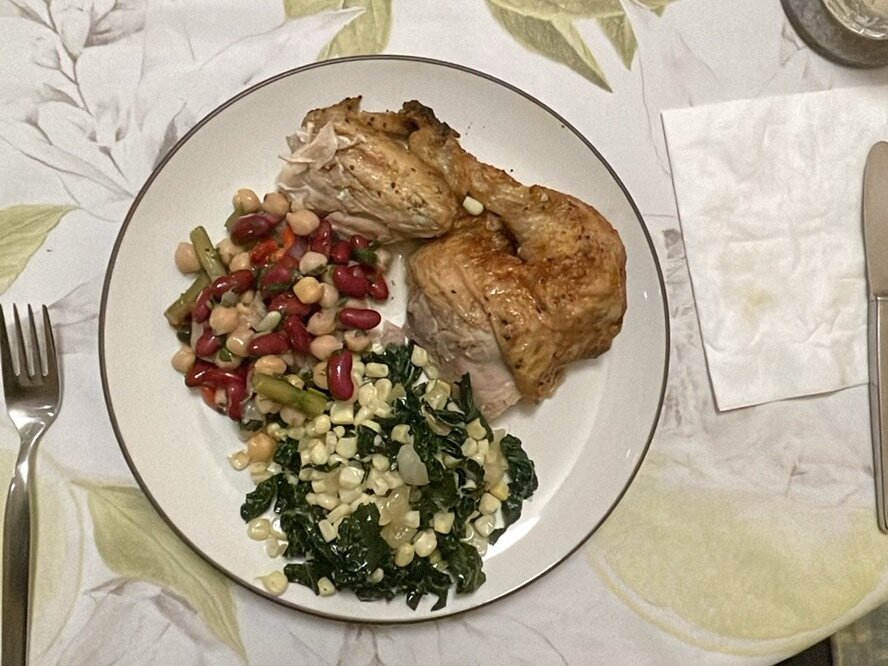
Balanced lunch · Roast Chicken & Bean Medley · 42g protein · 480 cal · 9g fiber
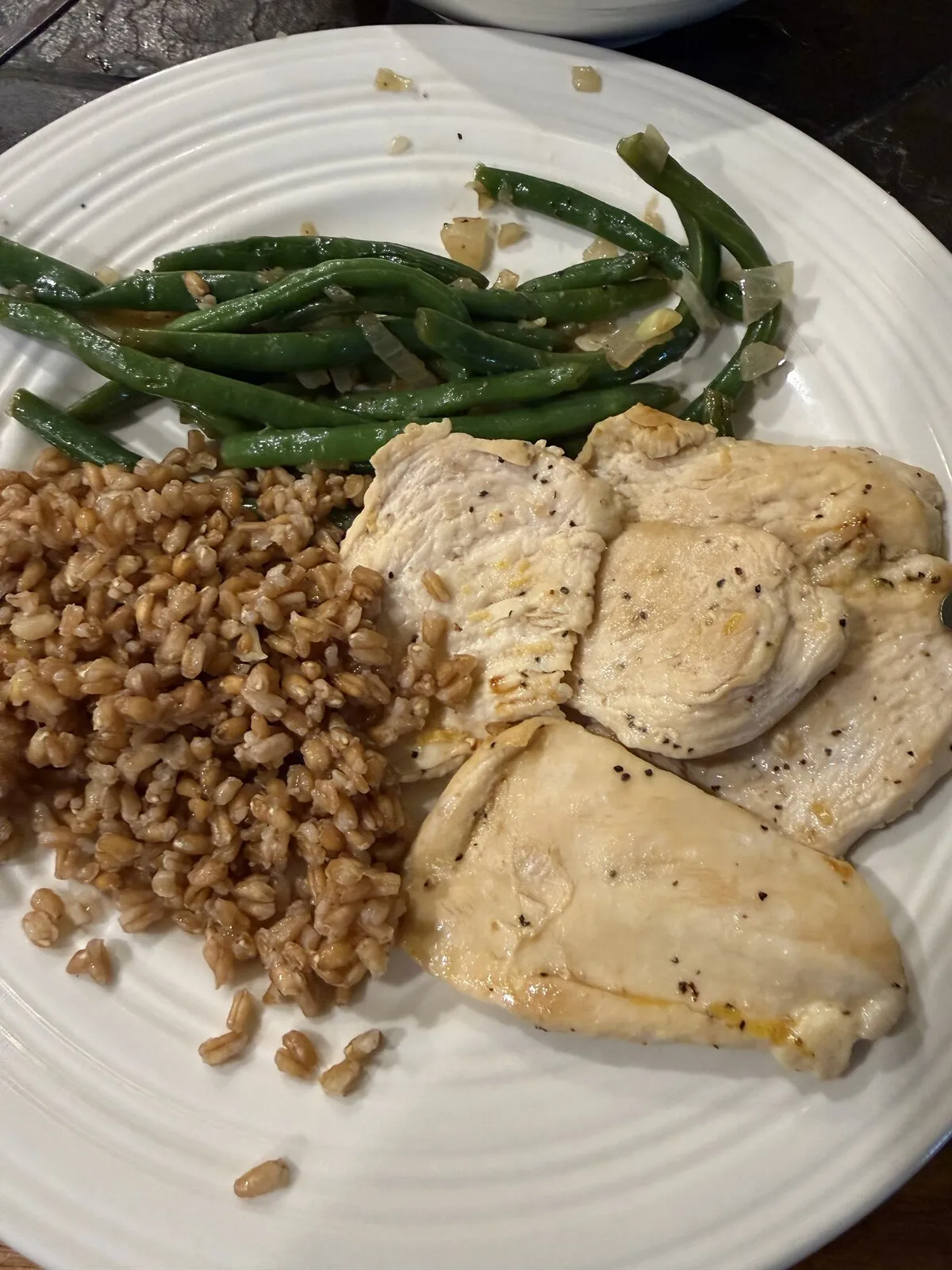
High protein dinner · Chicken Breast, Green Beans & Farro · 44g protein · 410 cal · 7g fiber
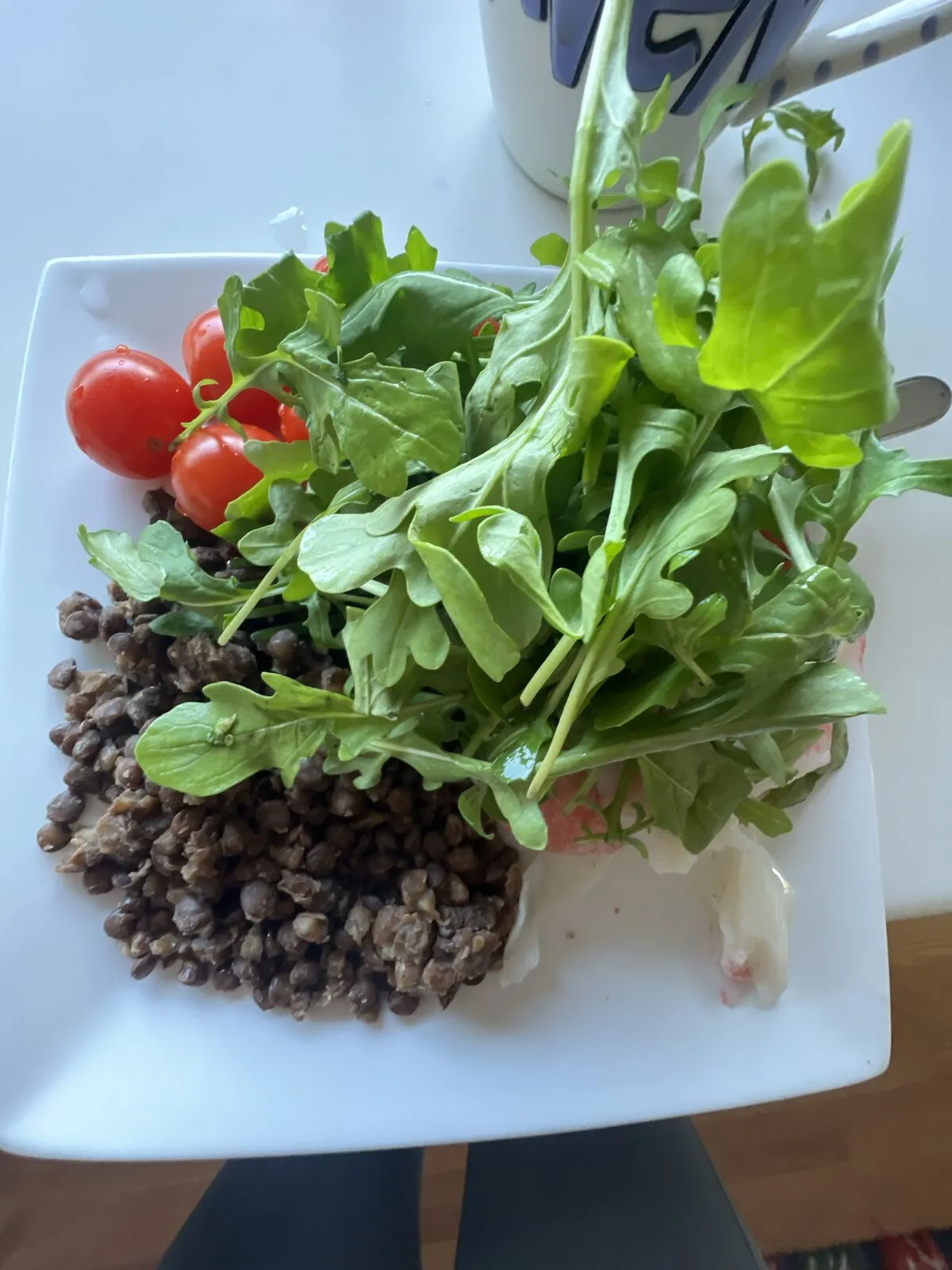
Balanced lunch · Lentils, Arugula & Cherry Tomatoes · 36g protein · 390 cal · 12g fiber
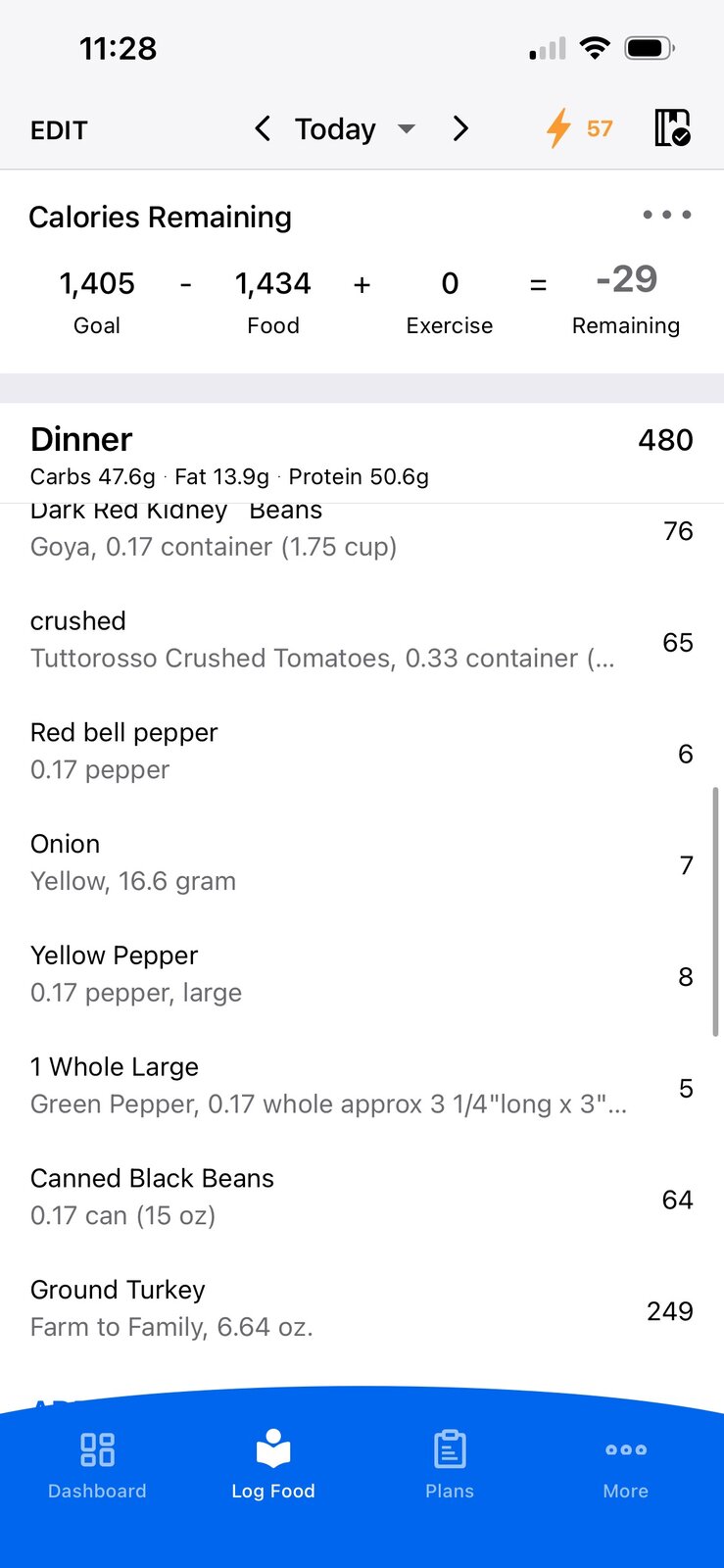
Lean & filling · Turkey, Bean & Pepper Medley · 40g protein · 450 cal · 8g fiber
These aren’t aspirational — they’re from real food logs. The common thread is protein density: 36-48g of protein in 390-480 calories. When appetite is suppressed, every meal needs to pull its weight.
If GLP-1 isn’t for you — here’s what works
The core of what we call the FitMate approach comes down to a few principles that work whether or not you’re on medication:
Protein first, every meal. Aim for 0.7-0.8g per lb of body weight. Protein is the most satiating macronutrient — it keeps you full longer, preserves muscle, and has a higher thermic effect (your body burns more calories digesting it). When you build meals around protein and fiber, hunger becomes manageable without medication. Real examples: a double chicken burrito bowl at 597 cal and 82g protein, or roast chicken and veggies at 515 cal and 72g protein. These are the same meals our GLP-1 clients eat — they work for everyone.
Strength training over cardio. Resistance training 2-3x per week directly improves insulin sensitivity and builds the metabolically active tissue that keeps your resting metabolism high. Cardio is fine as a complement, but muscle is the engine. Compound movements — squats, deadlifts, rows, presses — plus 7,000-10,000 daily steps is the starting point.
Structured meals, not restriction. We’ve found from analyzing 50,000+ food logs that people who eat three structured, balanced meals consistently outperform grazers and restrictive dieters. It’s not about eating less — it’s about eating smarter. When your meals are protein-dense and fiber-rich, you naturally eat fewer calories because you’re actually full.
Sleep and stress are metabolic levers. Poor sleep impairs glucose metabolism by up to 30% the next day. Chronic stress elevates cortisol, which promotes abdominal fat storage. These aren’t “nice to have” — they’re as important as what you eat. The person sleeping 8 hours with an imperfect diet often beats the person with a “perfect” diet on 5 hours of sleep.
I’ve written a complete guide to losing weight without GLP-1 that goes deeper on all of this. The bottom line: give these fundamentals 8-12 weeks of genuine consistency before deciding you need medication. Many people never end up needing it.
So, should you try it?
If you don’t have that much to lose, or you haven’t given the fundamentals a real shot yet — start with protein, strength training, and structured meals. You might not need medication at all.
And if you do go the medication route — please don’t wing the nutrition. The difference between someone who loses 50 lbs of mostly fat and builds lasting habits, and someone who loses 50 lbs of fat and muscle and regains it all, almost always comes down to whether they had a protein strategy and resistance training program alongside the prescription.
Either way — with or without medication — the lifestyle work is the same. Protein, strength training, structured meals, sleep. The medication makes it easier. But the habits are what make it last.
The complete GLP-1 nutrition guide
Everything you need to eat right on medication
Weight loss without medication
Lifestyle strategies that work on their own
GLP-1 and muscle loss
The biggest risk and how to prevent it
Protein targets on GLP-1
How much you actually need
Frequently asked questions
Should I try GLP-1 medication for weight loss?
If you have a significant amount of weight to lose and you’ve genuinely tried lifestyle changes without results, it’s worth considering. These medications change your biological hunger signals and improve insulin sensitivity. But they work best when paired with high-protein nutrition and strength training — medication alone leads to muscle loss and eventual regain.
Can I lose weight without GLP-1 medication?
Yes. Optimizing protein intake (0.7-0.8g per lb body weight), strength training 2-3x per week, and improving sleep are effective for many people, especially those within 20-30 lbs of their goal. For people with 50+ lbs to lose or significant insulin resistance, medication often bridges the gap that lifestyle alone can’t.
What is the biggest risk of GLP-1 medication?
Muscle loss. Up to 40% of weight lost on GLP-1 can be lean muscle mass if you don’t prioritize protein and resistance training. This slows your metabolism, increases injury risk, and makes weight regain much more likely when you stop the medication.
How much protein do I need on GLP-1?
Aim for 0.7-0.8g of protein per lb of body weight daily. When appetite is suppressed, protein drops first because high-protein foods take more effort. Plan meals around protein first — every bite counts when you’re eating less.
What should I do alongside GLP-1 medication?
Three things: hit your protein targets daily, do resistance training 2-3 times per week, and eat enough total calories (at least 1,200-1,400). This combination preserves muscle, protects your metabolism, and sets you up for lasting results — not just temporary weight loss.
Keep reading
The Complete GLP-1 Nutrition Guide
Protein targets, meal timing, and data from 3,000+ tracked meals
Can You Lose Weight Without GLP-1?
Evidence-based lifestyle strategies that actually work
How Much Protein on GLP-1?
Why your needs change on medication — and how to hit them
GLP-1 and Muscle Loss
Up to 40% of weight lost can be muscle — here’s how to prevent it
Preventing Weight Regain
What research says about maintaining loss after GLP-1
Managing GLP-1 Side Effects
Diet strategies for nausea, constipation, and low appetite
Want help with the nutrition part?
FitMate Coach builds personalized nutrition plans for GLP-1 users — protein tracking, meal guidance, and coaching that understands your medication.