Most people regain two-thirds of the weight they lost within a year. But the research also shows it doesn’t have to go that way — if you build the right habits before your last dose.
How much weight do people regain after stopping GLP-1?
67%
Of weight lost is regained within 12 months of stopping
1-3 wks
Before appetite starts returning after last dose
40%
Of weight lost on GLP-1 can be lean muscle mass
Why does the weight come back?
Hunger hormones rebound
Ghrelin (your hunger hormone) increases significantly after weight loss. GLP-1 medications keep it suppressed. When you stop, ghrelin surges — often beyond your pre-medication baseline, making you hungrier than you were before you started.
Metabolic rate drops
Your resting metabolic rate decreases as you lose weight, especially if you’ve lost muscle mass. After stopping GLP-1, you’re burning fewer calories per day but experiencing stronger hunger signals — a difficult combination.
Food reward signaling returns
GLP-1 medications reduce the dopamine-driven pleasure response to hyper-palatable foods. When you stop, foods like pizza, chips, and desserts become as rewarding as they were before — and your brain actively seeks them out to restore energy balance.
Muscle loss compounds the problem
If you lost significant muscle mass while on GLP-1 (up to 40% of total weight lost can be muscle), your metabolic rate is now lower than it would be at this weight. Less muscle means fewer calories burned at rest, making regain even more likely.
How do you keep the weight off after stopping GLP-1?
Hit 1.2-1.6g protein per kg, every day
That’s roughly 25-40g per meal across 3-4 meals. Track it for a week — most people discover they’re getting half of what they need, especially post-GLP-1 when appetite is still adjusting.
Strength train 2-3x per week
Focus on compound movements: squats, deadlifts, rows, presses. These recruit the most muscle tissue and have the greatest impact on metabolic rate and insulin sensitivity.
Track and adjust weekly
Weigh yourself at the same time, same conditions, 2-3 times per week. A 1-2 pound fluctuation is normal. A consistent upward trend over 2+ weeks means something needs to change — usually protein or activity levels.
What should you eat after stopping GLP-1?
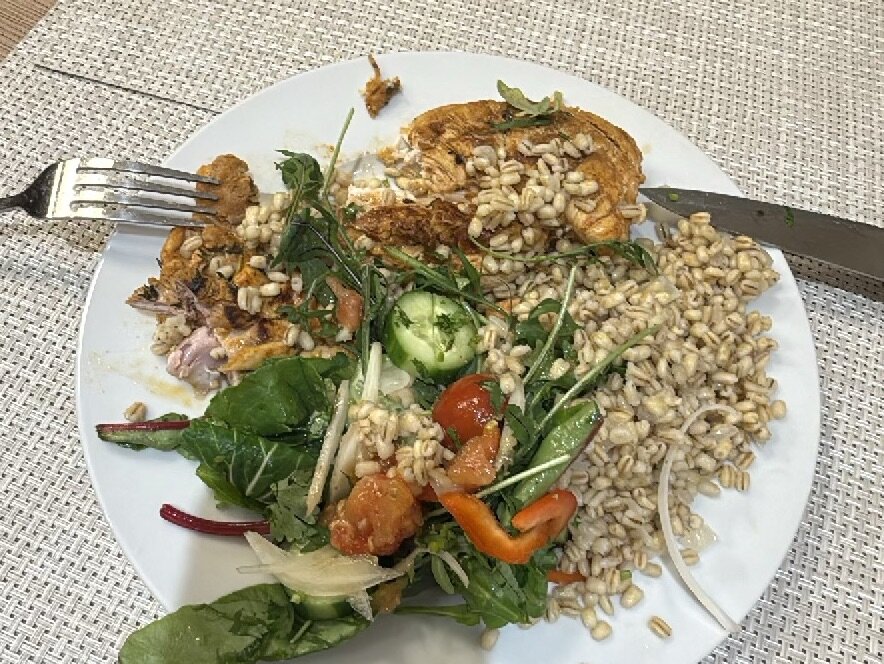
High protein dinner · Grilled Chicken, Barley & Salad · 36g protein · 481 cal · 8g fiber
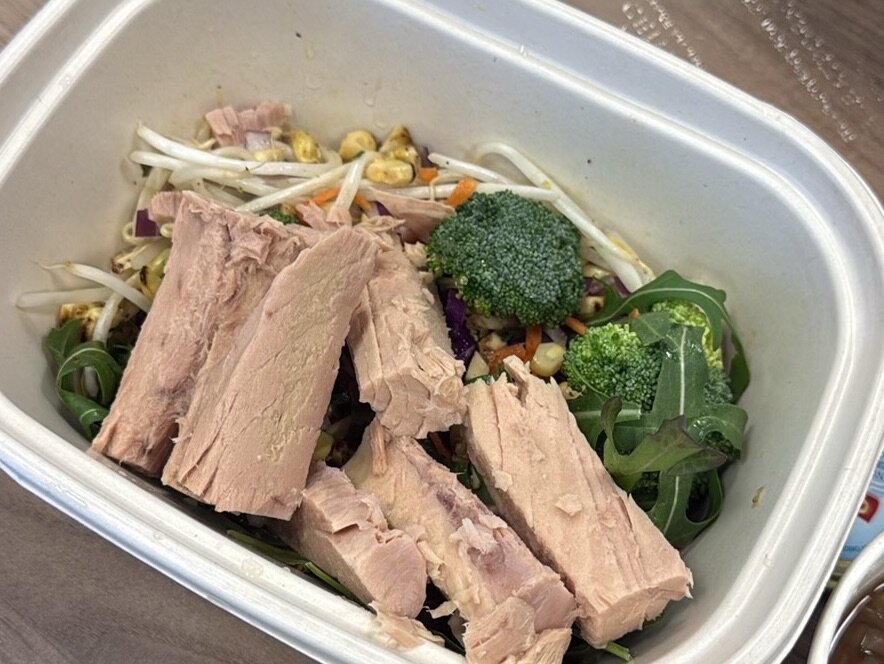
High protein lunch · Tuna & Veggie Salad Bowl · 38g protein · 320 cal · 6g fiber
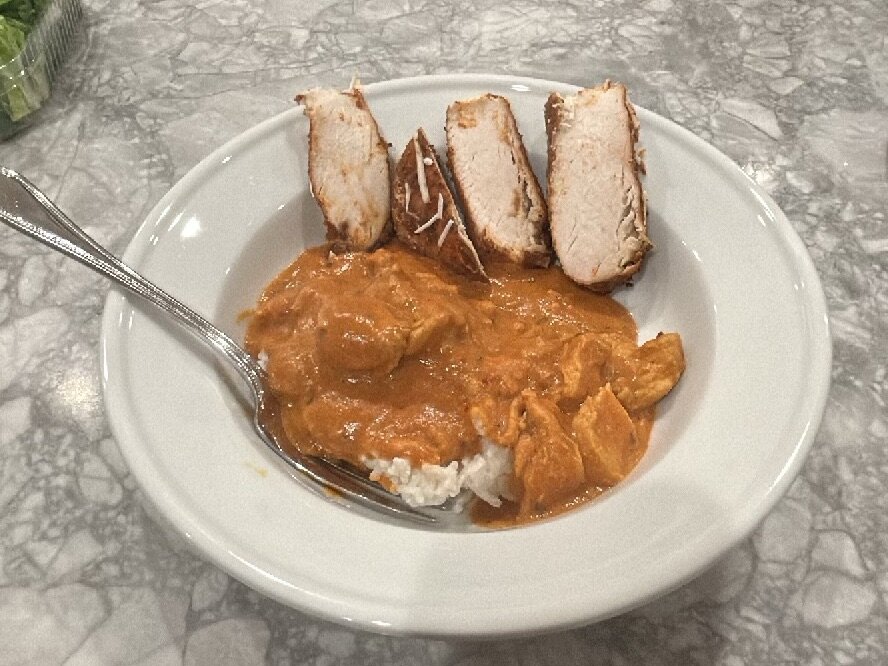
Balanced lunch · Chicken Tikka with Rice · 48g protein · 499 cal · 7g fiber
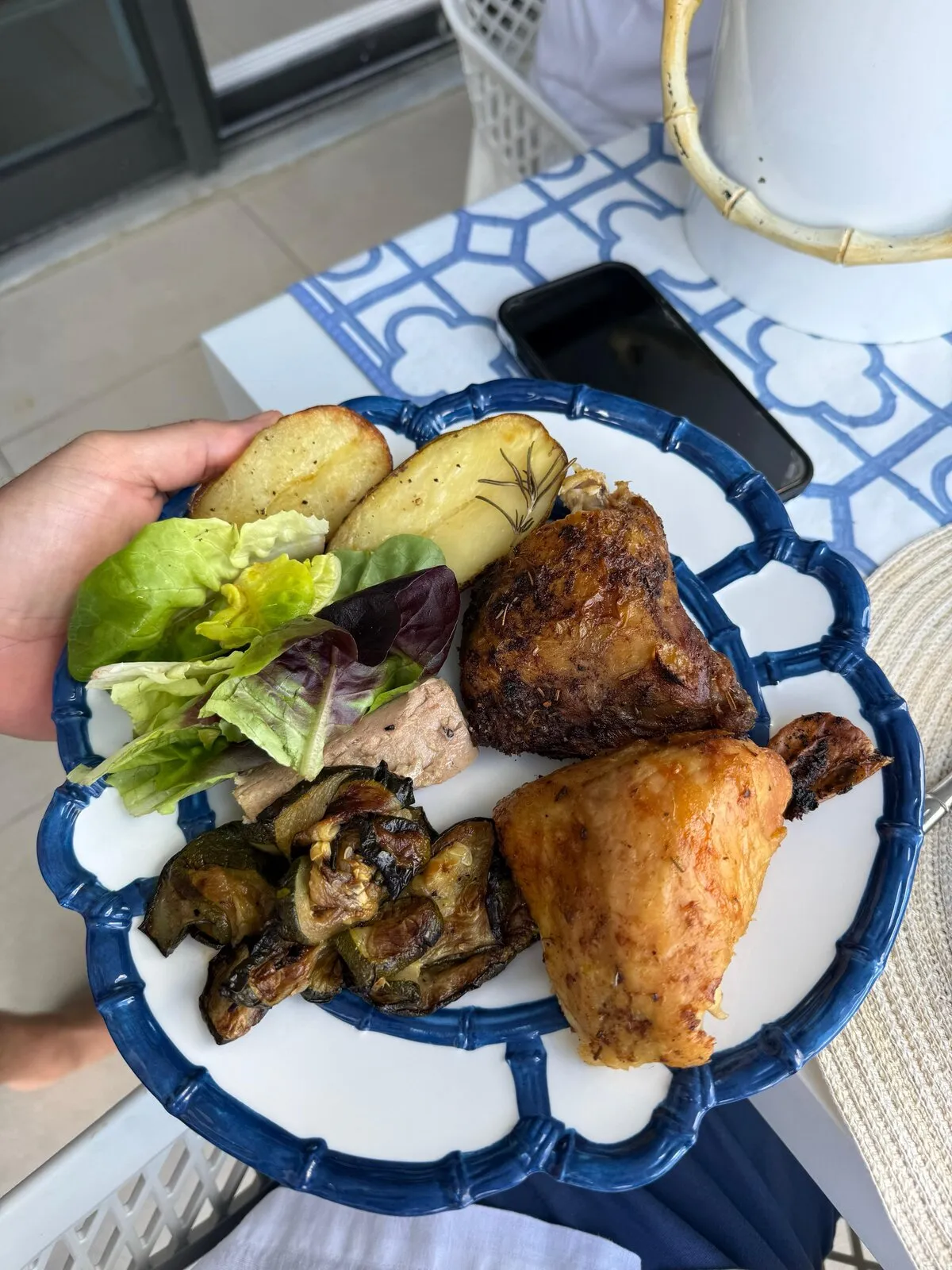
Lean & filling · Roast Chicken, Potatoes & Veg · 43g protein · 405 cal · 6g fiber
Should you taper off GLP-1 or stop cold turkey?
Typical taper protocol
Work with your prescriber to reduce dose every 2-4 weeks. For semaglutide, this might mean stepping down from 2.4mg to 1.7mg to 1.0mg to 0.5mg to 0.25mg. Each step lets you assess how your appetite responds before reducing further.
Use the taper to stress-test your habits
At each reduced dose, ask yourself: Am I hitting my protein targets? Am I maintaining my strength training? Am I staying full between meals? If any answer is no, address it before reducing further.
Expect appetite to return in 1-3 weeks
Semaglutide has a half-life of about one week. After your last dose, the medication clears your system over several weeks. Most people notice meaningfully increased hunger within 1-3 weeks, with full appetite returning by 4-8 weeks.
How does coaching change the outcome?
Preventing weight regain
The full guide to maintaining results long-term
GLP-1 and muscle loss
Why up to 40% of weight lost can be muscle
Complete GLP-1 nutrition guide
Protein targets, meal timing, and real data
Already on GLP-1?
How Fitmate supports GLP-1 users specifically
Frequently asked questions about stopping GLP-1
How much weight do people regain after stopping GLP-1?
Research shows most people regain about two-thirds of lost weight within 12 months of stopping semaglutide. A 2022 STEP 1 extension trial found participants regained 11.6 of the 17.3 percentage points of body weight lost after one year off medication. However, people who maintain high protein intake, strength training, and coaching support retain significantly more of their losses.
Should I taper off GLP-1 or stop cold turkey?
Most healthcare providers recommend a gradual taper rather than abrupt discontinuation. Tapering allows your body to readjust hunger signaling gradually, reducing the shock of returning appetite. A typical taper reduces the dose over 4-8 weeks while simultaneously building the nutrition and exercise habits that will maintain your results.
What should I eat after stopping Ozempic or Wegovy?
After stopping GLP-1 medication, prioritize high-protein meals (1.2-1.6g per kg body weight), fiber-rich foods for satiety, and structured meal timing. The appetite suppression from GLP-1 will fade, so you need foods that naturally promote fullness — lean proteins, vegetables, legumes, and whole grains. Avoid returning to ultra-processed foods that drive overconsumption.
Can I keep the weight off after stopping GLP-1 medication?
Yes, but it requires deliberate strategy. People who maintain their results after stopping GLP-1 typically share three habits: they keep protein intake above 1.2g per kg, they do strength training 2-3 times per week, and they have ongoing accountability through coaching or structured support. Without these, the biological drive to regain is very strong.
How long does it take for appetite to return after stopping GLP-1?
Most people notice appetite returning within 1-3 weeks of their last dose, with full hunger levels typically returning within 4-8 weeks. Semaglutide has a half-life of about one week, so the medication leaves your system gradually. This window is critical for having strong nutrition habits already in place.
Keep reading
Preventing Weight Regain After GLP-1
Habit-building strategies that make results stick
GLP-1 and Muscle Loss
Up to 40% of weight lost can be muscle — here’s how to prevent it
The Complete GLP-1 Nutrition Guide
Protein targets, meal timing, and data from 3,000+ tracked meals
Weight Loss Without GLP-1
Evidence-based strategies when medication isn’t the answer
Body Recomposition on GLP-1
Lose fat and preserve muscle while on medication
Strength Training on GLP-1
The exercise strategy that makes the biggest difference
Planning to stop GLP-1? Don’t go it alone.
FitMate Coach builds personalized transition plans — AI-powered meal tracking, protein monitoring, and 1:1 coaching to help you keep what you’ve worked so hard to lose.